

Some days it feels easy to focus on what’s going well. Other days, it can feel much harder to reconnect with hope, trust, or the future you’re trying to create.
The Abraham Hicks processes are a collection of reflective exercises designed to help you shift your perspective, release resistance, and focus more intentionally on the experiences you’d like to invite into your life.
Some are centered around gratitude. Others encourage visualization, journaling, self-reflection, or emotional clarity. The beautiful thing is that you don’t need to do all 22. Often, a single exercise can offer exactly the shift you need in the moment.
Below you’ll find the complete list of Abraham Hicks processes, along with simple explanations for each one.
At the end of a long day… Cozy sleep stories are waiting inside The Haven Shoppe to quiet your mind and guide you into dreams 💙 Begin your visit.
- 1. Rampage of Appreciation
- 2. Magical Creation Box
- 3. Creative Workshop
- 4. Virtual Reality
- 5. Prosperity Game (Checkbook Game)
- 6. Process of Meditation
- 7. Evaluating Dreams
- 8. Book of Positive Aspects
- 9. Scripting
- 10. Place Mat Process
- 11. Segment Intending
- 12. Wouldn’t It Be Nice If…
- 13. Which Thought Feels Better?
- 14. Clearing Clutter for Clarity
- 15. Wallet Process
- 16. Pivoting
- 17. Focus Wheel Process
- 18. Finding the Feeling-Place
- 19. Releasing Resistance to Become Free of Debt
- 20. Turning It Over to the Manager
- 21. Reclaiming One’s Natural State of Health
- 22. Moving Up the Emotional Scale
- Final Thoughts
1. Rampage of Appreciation
Emotional Set-Point: 1-5
When To Do It: When you’re already feeling good and would like to carry that feeling a little further. It’s also a wonderful practice for those moments when negativity starts to creep in and you’d like to gently redirect your attention.
Choose something in your environment and place your full attention on appreciating it. It can be anything — a cozy chair, a favorite mug, a beautiful flower, your pet, or even the weather outside your window.
Then begin listing things you appreciate about it, either quietly in your mind or by writing them down. As you continue, you’ll often notice even more things to appreciate naturally coming to mind.
Stay with the exercise for as long as it feels enjoyable. The goal isn’t perfection. It’s simply to spend a few moments focusing on what’s already bringing beauty, comfort, or support into your life.
Rampage of Appreciation Example
Imagine you’re grocery shopping:
- Everything looks so fresh and abundant.
- I’m grateful to have access to nourishing food.
- It’s comforting to know I can fill my home with things that support my well-being.
- I appreciate the people who work hard to keep these shelves stocked.
- I look forward to turning these ingredients into delicious meals.
- The music in here is pleasant.
- It’s nice to be part of a community where people can gather and support local businesses.
The more you look for things to appreciate, the easier it becomes to find them.
2. Magical Creation Box
Emotional Set-Point: 1-5
When To Do It: When you’d like to spend time nurturing a dream, goal, or future possibility.
A Creation Box is a simple container filled with reminders of something you’d like to welcome into your life. You might include photos, sketches, magazine clippings, meaningful objects, written intentions, or anything else that helps bring your vision to life.
As inspiration arrives, continue adding new pieces to your box. Over time, it becomes a beautiful collection of hopes, ideas, and possibilities that keeps you connected to what you’re creating.
The real magic of this process is that it invites you to enjoy the journey, not just the outcome.
Creation Box Example
If you’re dreaming of a cozy backyard retreat, your box might include:
- Photos of outdoor gathering spaces
- Samples of stone, tile, or fabrics
- Pictures of fire pits and garden paths
- Packets of flower seeds
- Sketches of your ideal layout
- A list of feelings you’d like the space to inspire: comfort, relaxation, joy, connection, and peace
Allow yourself to be playful and imaginative. There are no rules.
3. Creative Workshop
Emotional Set-Point: 1-5
When To Do It: When you’d like more clarity about what feels important to you right now.
This process helps you explore your current desires and identify the areas of life that feel most exciting, meaningful, or ready for growth.
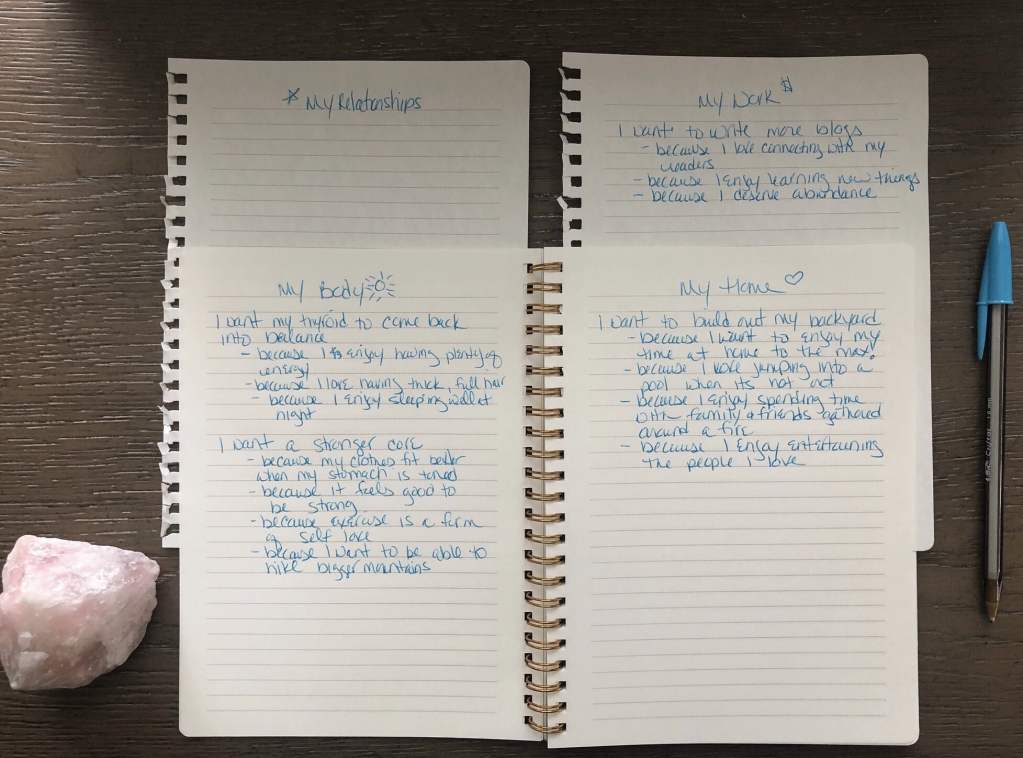
- Take four sheets of paper and label them: My Body, My Home, My Relationships, and My Work.
- Under each heading, write up to three things you’d love to experience, improve, or create in that area of your life.
- Beneath each item, write a few reasons why it matters to you.
As you work through the exercise, notice which ideas spark the most enthusiasm. Sometimes the simple act of exploring why you want something can bring surprising clarity.
Creative Workshop Example
For example, you might write a few goals related to your health, one or two ideas for your home, and a dream project you’d like to pursue. Some categories may feel full of inspiration, while others remain blank—and that’s perfectly okay.
The purpose of this exercise isn’t to create a perfect plan. It’s simply to discover what feels most meaningful to you in this season of life.
4. Virtual Reality
Emotional Set-Point: 1-8
When To Do It: When you’d like a few moments of comfort, joy, or emotional refreshment.
This process is simply a short, pleasant daydream.
Close your eyes and imagine a scene that feels peaceful, comforting, or genuinely enjoyable. There’s no need to solve a problem or improve anything. The goal is simply to spend a few moments focusing on an experience that feels good.
To build your scene, you might ask yourself:
- Where am I?
- Am I indoors or outdoors?
- Is anyone with me?
- What can I see, hear, smell, taste, or touch?
- How do I feel in this moment?
Spend a minute or two enjoying the experience, then gently return to your day. Think of it as a brief mental getaway that leaves you feeling a little lighter than before.
Virtual Reality Example
One comforting scene might be sitting beside a fireplace with a beloved pet curled up nearby. You can feel the warmth of the fire, hear the gentle purring, and enjoy the peaceful feeling of being together.
The details themselves aren’t important. What matters is choosing a scene that feels pleasant, comforting, and easy to enjoy.
At the end of a long day… Cozy sleep stories are waiting inside The Haven Shoppe to quiet your mind and guide you into dreams 💙 Begin your visit.
5. Prosperity Game (Checkbook Game)
Emotional Set-Point: 1-16
When To Do It: When you’d like to explore ideas of abundance, possibility, and financial well-being.
This process invites you to imagine having access to more resources than you currently do. The goal isn’t to create a budget or financial plan—it’s simply to spend some time exploring what greater abundance might look and feel like in your life.
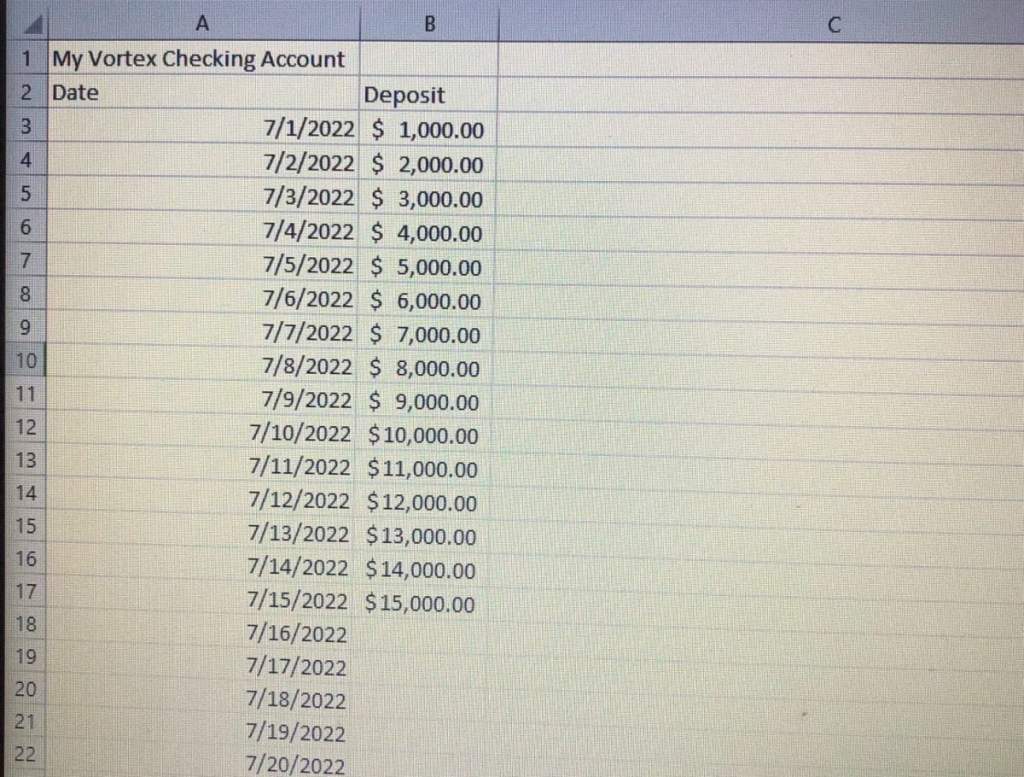
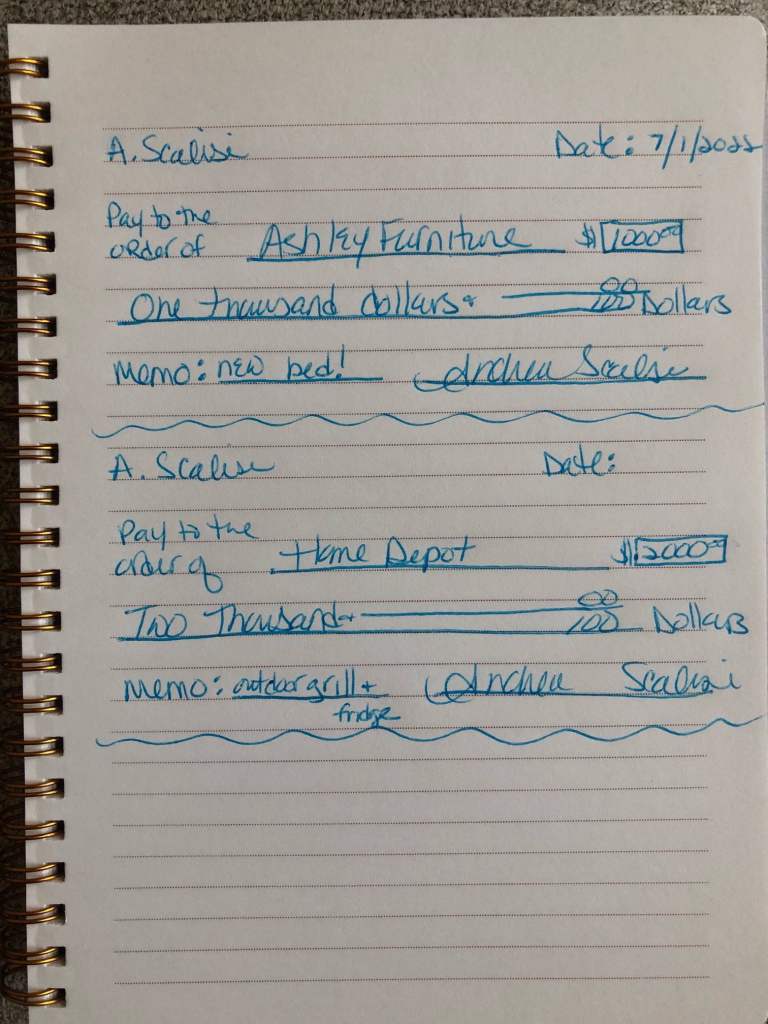
Begin by creating an imaginary checking account. On the first day, deposit $1,000 and spend it however you’d like. On the second day, deposit $2,000. On the third day, deposit $3,000, and continue increasing the amount each day.
As your balance grows, notice how your ideas evolve. You may find yourself thinking beyond immediate purchases and focusing instead on experiences, generosity, comfort, freedom, or the ways you’d like to support the people and causes you care about.
Prosperity Game Example
You might spend your imaginary funds on:
- Travel and new experiences
- Home improvements
- Education and personal growth
- Gifts for loved ones
- Charitable giving
- Investments and long-term goals
There are no right or wrong answers. The purpose of this exercise is simply to explore what’s possible and enjoy imagining a future filled with abundance.
6. Process of Meditation
Emotional Set-Point: 1-22
When To Do It: Anytime you’d like to slow down, clear your mind, or reconnect with the present moment.
Meditation is one of the simplest ways to create a little more space between yourself and the constant stream of thoughts that move through your mind each day.
Rather than trying to solve problems or figure everything out, this practice invites you to pause, breathe, and simply be. Even a few quiet minutes can help you feel calmer, more centered, and more connected to yourself.
Example of Meditation
Put on comfortable clothes and find a quiet place where you won’t be disturbed for a few minutes. You may wish to set a timer so you can fully relax.
Close your eyes and gently bring your attention to your breath. Notice each inhale and exhale without trying to change anything.
When your mind wanders—which it naturally will—simply guide your attention back to your breath with kindness.
If you enjoy guided relaxation, you may also enjoy our collection of enchanted sleep stories, designed to help you unwind and drift into a peaceful night’s sleep.
At the end of a long day… Cozy sleep stories are waiting inside The Haven Shoppe to quiet your mind and guide you into dreams 💙 Begin your visit.
7. Evaluating Dreams
Emotional Set-Point: 1-22
When To Do It: When you’d like to reflect on a dream that felt meaningful or memorable.
Before falling asleep, set a simple intention to remember anything important from your dreams. You might say:
“I intend to rest well and wake up refreshed. If there’s something helpful for me to remember from my dreams, I’ll recall it when I wake up.”
When you awaken, take a few moments to reflect on what you remember. Rather than focusing on every detail, pay attention to how the dream made you feel.
Dreams can sometimes offer insight into our emotions, hopes, worries, and inner experiences. Approaching them with curiosity can help you better understand yourself and what may be asking for your attention.
The goal isn’t to interpret every symbol perfectly—it’s simply to notice what resonates and explore it with an open mind.
8. Book of Positive Aspects
Emotional Set-Point: 1-10
When To Do It: When you’d like to focus on the things you appreciate or shift your perspective toward something more supportive.
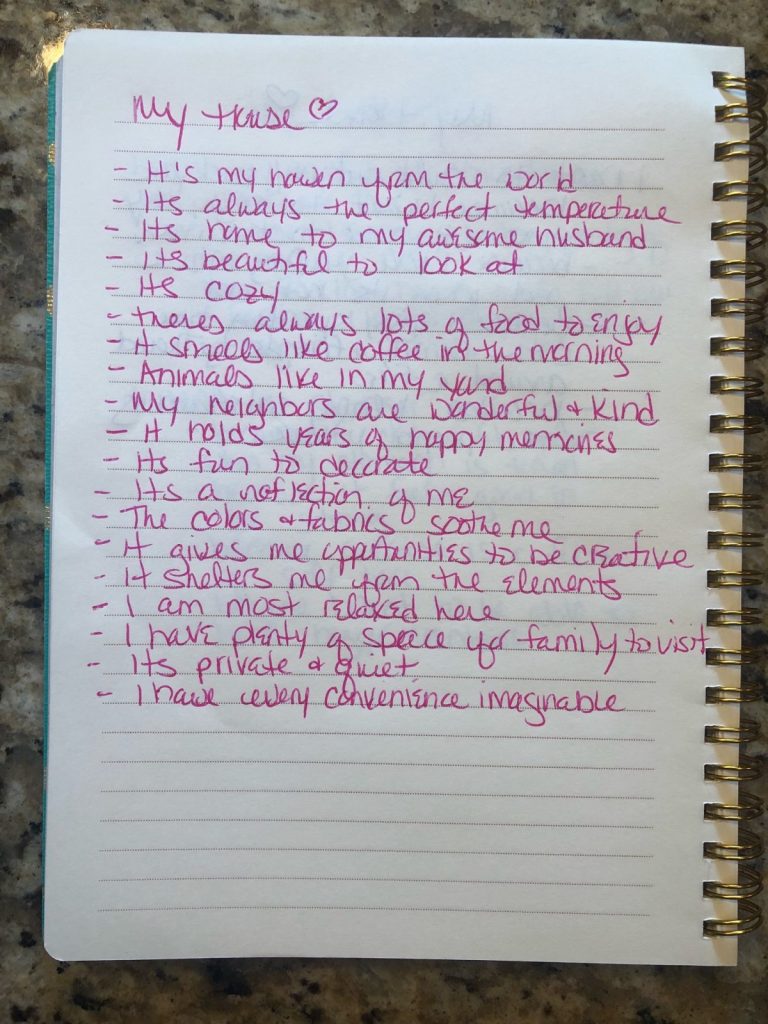
Choose a notebook you enjoy using and label it My Book of Positive Aspects.
On the first page, write the name of a person, place, pet, experience, or object that naturally brings you positive feelings. Then spend a few minutes writing down everything you appreciate about it.
Once you’ve filled a page, repeat the process with another subject.
The more you practice looking for things to appreciate, the easier it becomes to notice beauty, comfort, support, and goodness in your everyday life.
Book of Positive Aspects Example
You might create a page about your home, a beloved pet, a close friend, your garden, or any place that brings you comfort and joy.
There are no rules. Simply allow yourself to focus on what feels good and see where your thoughts lead.
9. Scripting
Emotional Set-Point: 2-6
When To Do It: When you’re feeling inspired about a dream, goal, or future possibility.
Scripting is a creative writing exercise that invites you to imagine how you’d like a situation to unfold.
Choose a topic and begin writing about it as though you’re describing a chapter from your life. Include as much detail as you’d like, focusing on the experiences, emotions, and moments that feel meaningful to you.
This process can help you explore your hopes, clarify what matters most, and spend a little time imagining what could be possible.
Scripting Example
We’ve created a separate guide with examples and prompts to help you get started: How To Use Scripting to Manifest Your Happy Future
10. Place Mat Process
Emotional Set-Point: 2-11
When To Do It: When life feels busy and you’d like a little more breathing room.
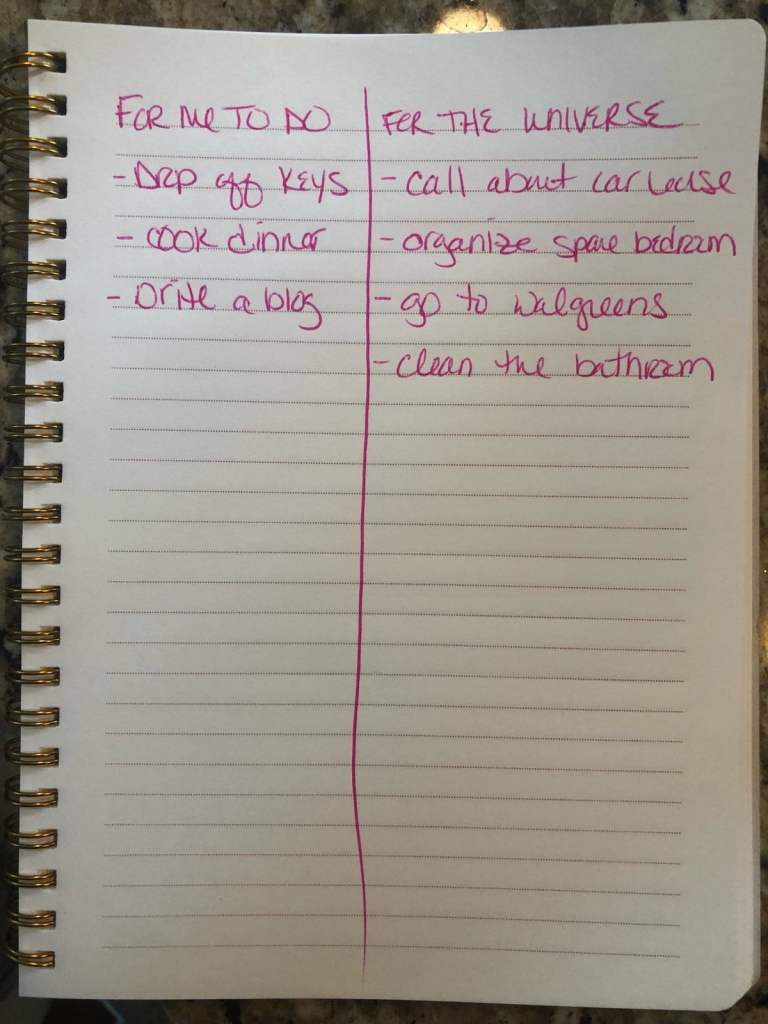
Take a sheet of paper and draw a line down the middle.
Label one side:
Things I’ll Do Today
and the other:
Things I’d Like the Universe To Handle
On your side, write only the tasks and responsibilities that genuinely require your attention today. On the other side, place things that can wait, and any worries, questions, or situations that feel outside your control.
The purpose of this exercise is not to avoid responsibility. It’s simply a reminder that you don’t have to carry everything at once.
Place Mat Process Example
Sometimes the greatest gift is allowing yourself to focus on what’s in front of you and releasing the rest, at least for today.
11. Segment Intending
Emotional Set-Point: 4-11
When To Do It: Before a meeting, appointment, errand, conversation, or any part of your day you’d like to approach intentionally.
A segment is simply a portion of your day.
Before beginning a new activity, pause for a moment and think about how you’d like it to unfold. Consider the qualities you’d like to experience, such as ease, productivity, connection, confidence, or enjoyment.
The purpose of this exercise is to begin each segment with intention rather than moving through the day on autopilot.
Segment Intending Example
Before getting out of bed, you might think:
“I intend to have a peaceful morning. I’m looking forward to my first cup of coffee, a productive start to my day, and a few pleasant surprises along the way.”
You don’t need to script every detail. Simply choose a direction and allow the day to unfold from there.
12. Wouldn’t It Be Nice If…
Emotional Set-Point: 4-16
When To Do It: When you’d like to shift your focus from frustration or worry toward possibility.
This process is wonderfully simple.
Whenever you notice yourself dwelling on a problem, begin a new sentence with:
“Wouldn’t it be nice if…”
Then fill in the blank with something you’d love to experience.
The goal isn’t to figure out how it will happen. It’s simply to spend a few moments exploring possibilities that feel hopeful, encouraging, or exciting.
Wouldn’t It Be Nice If… Example
- Wouldn’t it be nice if everything came together more easily than I expected?
- Wouldn’t it be nice if a helpful solution appeared at just the right time?
- Wouldn’t it be nice if this worked out even better than I imagined?
- Wouldn’t it be nice if I discovered a new opportunity I hadn’t considered before?
Sometimes a small shift in perspective is all it takes to open the door to new ideas and possibilities.
13. Which Thought Feels Better?
Emotional Set-Point: 4-17
When To Do It: When you’re feeling stuck, upset, overwhelmed, or unsure how to view a situation.
This process is based on a simple idea: you don’t need to leap from frustration to joy in a single step. Often, the most helpful thing you can do is reach for a thought that feels just a little better than the one you’re currently thinking.
Start by writing down your honest thoughts about the situation. Then begin exploring new perspectives, one thought at a time.
As you write, ask yourself:
Does this thought feel better, worse, or about the same?
Keep moving toward thoughts that bring even a small sense of relief, understanding, or perspective.
Which Thought Feels Better? Example
Imagine someone says something hurtful.
You might begin with:
“That was rude and it really upset me.”
Then gradually explore new thoughts:
- Maybe they’re having a difficult day.
- Their behavior says more about them than it does about me.
- I don’t have to carry this interaction with me all day.
- I can choose where I place my attention.
- This moment doesn’t define the rest of my day.
The goal isn’t to force yourself to feel positive. It’s simply to find a perspective that feels a little lighter than the one before it.
14. Clearing Clutter for Clarity
Emotional Set-Point: 4-17
When To Do It: When your space feels cluttered, your mind feels overwhelmed, or you’d like a fresh start.
This process encourages you to temporarily remove items that are no longer serving your everyday life.
Gather several boxes and number them. Then move through your space, asking yourself:
“Do I need this as part of my current life?”
If the answer is yes, leave it where it is. If the answer is no, place it into one of the boxes.
Group similar items together as you go. You might end up with boxes for old clothing, unused electronics, paperwork, decorations, hobby supplies, or other belongings that no longer play an active role in your daily life.
Clearing Clutter for Clarity Example
Once you’ve filled the boxes, place them somewhere out of the way and allow a few weeks to pass.
If you haven’t needed, used, or thought about those items during that time, you may feel more comfortable donating, recycling, or letting them go.
Sometimes creating a little more space around you can also create a little more space within you.
15. Wallet Process
Emotional Set-Point: 6-16
When To Do It: When you’d like to cultivate a greater sense of abundance and possibility.
Place a $100 bill (or another amount that feels meaningful to you) in your wallet and leave it there.
As you move through your day, occasionally notice things you could purchase with that money. Maybe it’s a meal at a favorite restaurant, a bouquet of flowers, a new book, or a thoughtful gift for someone you love.
The purpose of this exercise isn’t to spend the money. It’s simply to remind yourself that resources are available and that opportunities for enjoyment, generosity, and comfort already exist all around you.
Wallet Process Example
While browsing a bookstore, you might think:
“I could easily buy that journal.”
While walking through a garden center:
“Those flowers would fit perfectly on my porch.”
These small moments can help shift your attention from scarcity toward possibility.
16. Pivoting
Emotional Set-Point: 8-17
When To Do It: When you catch yourself focusing on what isn’t working and would like to redirect your attention.
Pivoting is the practice of using an unwanted experience to gain clarity about what you would prefer instead.
When something feels frustrating, disappointing, or uncomfortable, pause and ask yourself:
“If I don’t want this, what do I want?”
Rather than staying focused on the problem, gently turn your attention toward the qualities, experiences, or outcomes you’d rather create.
Pivoting Example
Imagine you’re feeling run down and unwell.
You might begin by noticing:
“I don’t like feeling this tired.”
Then pivot toward:
“I’d prefer to feel energized, healthy, and supported.”
The goal isn’t to ignore your current circumstances. It’s simply to use them as a guide for identifying what matters most to you.
17. Focus Wheel Process
Emotional Set-Point: 8-17
When To Do It: When you’d like to shift your perspective on a subject that feels challenging.
A Focus Wheel is a simple writing exercise designed to help you gradually reach for thoughts that feel more supportive, encouraging, and aligned with what you’d like to experience.
Rather than forcing yourself to jump straight into positivity, the process helps you build momentum one thought at a time.
Focus Wheel Example
We’ve created a step-by-step guide that walks you through the entire process: How To Make a Focus Wheel for Manifesting
18. Finding the Feeling-Place
Emotional Set-Point: 9-17
When To Do It: When you’d like to reconnect with the reasons behind a dream, goal, or desire.
Sometimes it’s easy to become focused on what’s missing, frustrating, or not yet happening. This process invites you to shift your attention toward the feelings you’d like to experience instead.
Ask yourself:
How do I hope this will feel?
Then spend a few moments imagining those emotions as vividly as possible.
Whether your desire involves a new home, improved health, stronger relationships, or a personal goal, the feelings you’re seeking may be surprisingly similar: peace, freedom, joy, comfort, confidence, connection, or excitement.
Finding the Feeling-Place Example
Imagine you’re dreaming of creating a beautiful backyard retreat.
Instead of focusing on what’s currently lacking, you might focus on the experience you’re hoping to create:
“I can already imagine how peaceful it will feel to relax outside on a warm evening. I love the idea of gathering with family and friends, enjoying delicious meals outdoors, and having a beautiful space to unwind and recharge.”
The goal is simply to spend time with the feelings you’d like to invite into your life.
19. Releasing Resistance to Become Free of Debt
Emotional Set-Point: 10-22
When To Do It: When you’re working toward financial freedom and would like to focus on steady progress rather than overwhelm.
Create a page in a notebook and list each of your debts from largest to smallest. For each one, record the minimum monthly payment and the current balance.
At the top of the page, write an encouraging statement that reflects your commitment to improving your financial situation. For example:
“I am steadily making progress toward financial freedom, one step at a time.”
Whenever possible, put a little extra money toward your smallest debt while continuing to make the minimum payments on the others.
As each debt is paid off, cross it off your list and celebrate the progress you’ve made.
Example
Over time, you’ll begin watching balances shrink and entire debts disappear from the page.
The purpose of this exercise is not only to reduce debt, but also to help you focus on progress, momentum, and the satisfaction that comes from honoring your financial goals.
20. Turning It Over to the Manager
Emotional Set-Point: 10-17
When To Do It: When you feel overwhelmed or as though you’re carrying too much responsibility on your own.
Imagine you’re the owner of a large company with countless moving parts. Rather than managing every detail yourself, you have a trusted manager who handles the day-to-day operations and helps keep everything running smoothly.
This exercise invites you to imagine handing some of your worries, unanswered questions, and unfinished tasks to that capable manager.
Whether you think of this support as the Universe, your higher self, your spirit team, or simply life unfolding as it should, the goal is the same: to remind yourself that you don’t have to carry everything alone.
Sometimes the most productive thing you can do is take a breath, trust the process, and allow yourself a little more ease.
21. Reclaiming One’s Natural State of Health
Emotional Set-Point: 10-22
When To Do It: When you’re feeling unwell, recovering, or would simply like to offer yourself a little extra comfort and compassion.
For this exercise, gather a notebook and create a list of gentle, reassuring thoughts that help you relax and feel supported.
You might choose statements such as:
- My body knows how to rest and recover.
- It’s okay to slow down and give myself the care I need.
- I trust my body to do what it was designed to do.
- There is no rush.
- I can take this one day at a time.
- Every breath invites a little more ease into my body.
- I am safe, supported, and cared for.
- My only job right now is to rest and be gentle with myself.
When you’re ready, find a comfortable place to lie down and slowly read through your list.
The purpose of this exercise is not to force healing. It’s simply to create an atmosphere of calm, comfort, and self-compassion while your body does its work.
22. Moving Up the Emotional Scale
Emotional Set-Point: 17-22
When To Do It: When you’re feeling discouraged, overwhelmed, sad, anxious, or emotionally stuck.
This process is built on a simple idea: you don’t have to feel amazing right away.
When you’re moving through difficult emotions, expecting yourself to jump straight into happiness can feel exhausting and unrealistic. Instead, focus on finding a thought, perspective, or activity that helps you feel just a little better than you do right now.
Notice where you are emotionally, then gently reach for the next step up. Small improvements count. A little relief counts. A little hope counts.
The goal isn’t perfection. It’s simply to meet yourself where you are and move forward one step at a time.
Moving Up the Emotional Scale Example
Imagine you’re feeling disappointed about something that didn’t go as planned.
You might begin with:
“I’m really upset this happened.”
Then gradually reach for thoughts that feel slightly more supportive:
- This is difficult, but I can get through it.
- I’ve handled challenges before.
- I don’t have to figure everything out today.
- There may be opportunities here that I can’t see yet.
- I trust myself to take the next step when I’m ready.
You don’t need to reach the top of the emotional scale in a single sitting. Sometimes moving up one or two rungs is enough to bring a welcome sense of relief.
Final Thoughts
Think of these 22 processes as a collection of gentle tools rather than a set of rules.
Some days you may find comfort in appreciation. Other days, a visualization, journaling exercise, or simple shift in perspective may be exactly what you need.
Trust yourself to choose the practices that feel supportive in this season of life. Small moments of clarity, hope, and intention have a way of adding up over time.
We’re so glad you stopped by the Haven Shoppe today, and we hope these exercises help you create a little more ease, possibility, and joy along your journey.
With love,
Jen & Andrea
Let this stay with you as you move through your day…
And when you’re ready to settle in, there’s a cozy, magical place waiting for you inside The Haven Shoppe.
You’ll receive an exclusive welcome sleep story right away 💛

Meet the Creators
Jen and Andrea are the creators behind The Haven Shoppe, a cozy, magical space devoted to rest, reflection, and gentle self-care. Through their sleep stories and writings, they invite you to slow down, trust your inner world, and return to yourself.
The Haven Shoppe LLC participates in Amazon and Awin affiliate programs. This means we may earn a small commission, at no extra cost to you, if you purchase through links on this page. Thank you for supporting our small business.
Sources:
Hi there! I came across your page as I continue on my manifestation journey and I am always so curious to hear about other manifesting stories that others have experienced–it excites me to hear about the joy of the collective and to see how this all shows up in the 3D for others while providing hope for my journey as well! Do you have an area on your page that talks about all the experiences you have been able to manifest based on Abraham’s teachings and your dedication to this work?
Thank you so much for your sweet words! I do not have a post that talks about my personal manifestations, but what a wonderful idea – thank you!
Thank you for putting this into a shorter format and simple to understand.
You made my day, and you are most welcome!
I have been struggling with applying the Abraham Teachings due to a strong programming on my beliefs. It’s so helpful to have a support that also utilizes their teachings. I am visual learner & your post is so helpful thank you so much for sharing. 🥹
Nathalia, this warms my heart. I’m so glad it helped. Sending you waves of healing and alignment! 💖✨
How kind of you to put this together. Its very helpful.
Thank you very much!
Cheers
Patrice
Hi Patrice, I’m so glad you found this post helpful! Thank you for leaving a comment 🩵
Thank you so much!
You are most welcome! 🩵
Thank you Andrea! I truly appreciate you summarizing all of this. It’s nice to see how other people see the processes, it’s inspiring and adds up to my learning as well.
You are most welcome! Thank you so much for your sweet comment 💫
So much appreciation to you for taking the time do this very thorough list and explain all of these processes in precise detail. And most importantly, you gave visual and written EXAMPLES of what we might write or actually do (ex. Book of Positive Aspects). So many people and websites re-explain these processes and describe them in great detail–which we can already get from “Ask and It is Given” but precious few gives us actual examples. For instance, we can listen to infinite youtube clips of Abraham describe the Book of Positive aspects, but very few human people provide a visual example of how to actually write on a topic – i.e. what might a page in my Book actually look like. Most of us already know how to do it but want some confirmation that we are doing it correctly. You have provided this confirmation. MANY MANY MANY thanks and MUCH MUCH MUCH appreciation.
You are very welcome, Raymond! I’m so glad you found the examples helpful!